Does Insurance Cover Ozempic for Weight Loss in 2026?
Coverage has improved significantly over the past two years — but it's still far from guaranteed. Here's the current state, what's changed, and how to maximize your odds of approval.
Want to check your specific plan right now?
Check in 60 seconds →The Big Picture: Where Coverage Stands in 2026
Three years ago, almost no commercial insurer covered Ozempic for weight loss. Today, roughly 60–70% of large employer health plans include some form of GLP-1 coverage — though the specific criteria, prior auth requirements, and formulary placement vary dramatically.
The shift was driven by a combination of clinical evidence (the SELECT trial showing 20% cardiovascular risk reduction), employer ROI data, and competitive pressure between insurers. The key word is large employer — small business and individual market plans are still much less likely to cover these drugs.
What Changed in 2025–2026
FDA Approval for Cardiovascular Risk Reduction
Semaglutide received FDA approval for cardiovascular risk reduction in adults with obesity or overweight and established heart disease. This expanded the qualifying diagnoses for insurance coverage beyond just Type 2 diabetes and weight loss, giving insurers a new medical justification to approve claims.
Medicare Still Excluded — For Now
Despite lobbying from patient groups, Medicare Part D still does not cover Ozempic or Wegovy for weight loss as of 2026. Legislation has been proposed multiple times but has not passed. If you are on Medicare, your realistic options are cash-pay compounded semaglutide or a Medicare Advantage plan that has voluntarily added GLP-1 coverage (rare but they exist).
Compounded Semaglutide Crackdown
In March 2026, the FDA issued 30 warning letters to telehealth companies selling compounded semaglutide following the removal of the drug shortage designation. Hims & Hers reached a deal with Novo Nordisk to stop marketing compounded versions. Several smaller providers exited the market. The result: fewer but more legitimate compounding pharmacy options, with prices stabilizing around $120–$180/month.
Which Insurers Are Most Likely to Cover Ozempic?
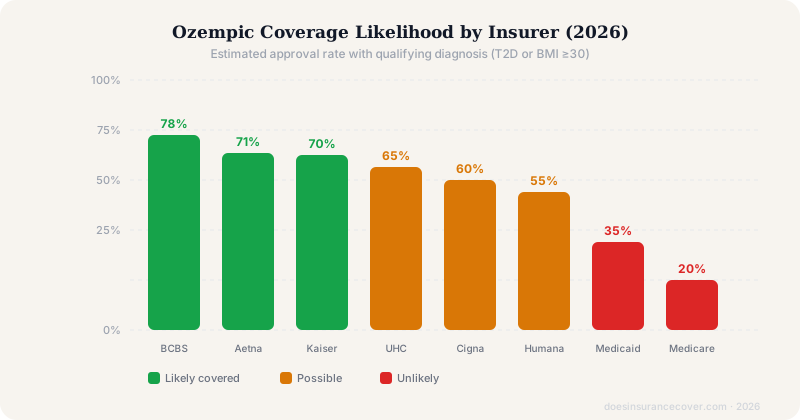
Coverage likelihood varies significantly by insurer:
- Blue Cross Blue Shield — highest approval rates (~78%). Most BCBS plans cover Wegovy on formulary for BMI ≥30.
- Aetna — strong coverage (~71%) with prior auth. Step therapy may apply.
- Kaiser Permanente — good coverage (~70%) and faster approvals due to integrated care model.
- UnitedHealthcare — highly variable (~65%). Commercial plans often cover; employer self-insured plans frequently exclude it entirely.
- Cigna — inconsistent (~60%). Always verify your specific plan formulary.
- Medicaid — state-dependent. California, New York, and Colorado mandate coverage. Most states do not.
- Medicare — does not cover for weight loss (~20% in T2D cases only).
The most important factor is your specific plan, not just your insurer. A UnitedHealthcare commercial plan may cover Ozempic while a UnitedHealthcare self-insured employer plan does not, even within the same company.
The Prior Authorization Process
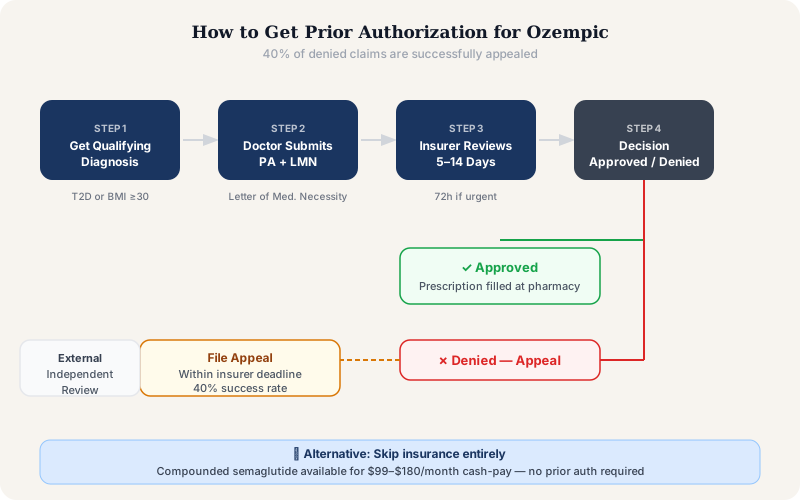
Even if your plan covers Ozempic, prior authorization is almost always required. Here's what most insurers need:
- Qualifying diagnosis — T2D, BMI ≥30, or BMI ≥27 with a comorbidity (hypertension, sleep apnea, high cholesterol, etc.)
- Documented lifestyle intervention — most plans want evidence you've tried diet and exercise first
- Letter of Medical Necessity — your doctor writes this with the appropriate ICD-10 codes
- No conflicting medications — some plans require you've tried and failed other weight loss medications first
The entire process typically takes 5–14 business days. If urgent, request expedited review — insurers are legally required to respond within 72 hours for urgent cases.
What To Do If You're Denied
A denial is not the end. 40% of appealed GLP-1 denials are overturned. The appeal process involves:
- Requesting the specific denial reason in writing
- Submitting additional clinical documentation (lab results, BMI history, comorbidity records)
- Having your doctor submit a peer-to-peer review request
- Filing a formal internal appeal within the insurer's stated deadline (usually 60–180 days)
- If internal appeal fails, requesting external independent review
Cash-Pay Alternatives: What They Cost in 2026
If insurance won't cover Ozempic, compounded semaglutide is a legal alternative that has survived the regulatory changes. Current pricing from reputable providers:
- Gala Health — from $129/month, GLP-1 telehealth with licensed providers, all 50 states
- TMates — from $99/month, prescription semaglutide and tirzepatide via licensed clinicians
All of these require a valid prescription from a licensed physician. HSA and FSA funds can be used. Monthly costs are dramatically lower than branded Ozempic's list price of $935/month, and comparable to what most people pay in copays even with insurance.
Frequently Asked Questions
Roughly 60–70% of large employer health plans now include some form of GLP-1 coverage in 2026. Coverage depends heavily on your insurer and specific plan. BCBS and Aetna have the highest approval rates. Medicare still does not cover Ozempic for weight loss as of 2026.
Blue Cross Blue Shield (78% approval rate), Aetna (71%), and Kaiser (70%) are the most likely to cover Ozempic with a qualifying diagnosis. UnitedHealthcare (65%) and Cigna (60%) vary significantly by specific plan — employer self-insured plans often exclude GLP-1s even when the carrier's commercial plans cover them.
Most insurers require Type 2 diabetes, a BMI ≥30 (obesity), or a BMI of 27–30 with a weight-related comorbidity such as hypertension, sleep apnea, or high cholesterol. The cardiovascular indication (established heart disease) may also qualify following the 2024 SELECT trial FDA approval.
Standard prior authorization takes 5–14 business days. If your doctor requests expedited review, insurers are legally required to respond within 72 hours. Always request expedited review if you have an urgent medical need.
Yes — and you should. Forty percent of appealed GLP-1 denials are overturned. Request the specific denial reason in writing, have your doctor submit additional documentation and request a peer-to-peer review, then file a formal internal appeal within the insurer's deadline (usually 60–180 days).
Sources
Bottom Line
If you have a qualifying diagnosis (T2D or BMI ≥30), you have a good chance of getting Ozempic covered — particularly with BCBS, Aetna, or Kaiser. If you're on Medicare, in a small employer plan, or want it without a qualifying diagnosis, cash-pay compounded semaglutide is likely your most practical path.
The fastest way to know exactly where you stand is to check your specific plan, insurer, and state — which takes about 60 seconds.
Get a personalized coverage estimate in 60 seconds based on your insurer, diagnosis, and state.
Check My Coverage →This article is for informational purposes only and is not medical or insurance advice. Coverage data is based on publicly available information as of May 2026.